A Factory-Tested Guide to Reading the Number on Your Console and Training in the Right Zone
TL;DR: Handlebar contact sensors on most exercise bikes run 8-14 bpm off from a chest strap during hard efforts, so treat the console number as a rough guide rather than a medical instrument. A chest strap measures the heart's electrical signal directly and stays within ±1-3 bpm, which makes it the only reliable option for zone-based interval training. Zone 2 (60-70% of maximum heart rate) builds your aerobic base, while Zone 4-5 work (80-95%) drives speed and fitness gains. The 220-minus-age formula is a starting estimate only, because real maximum heart rates vary by up to 10-15 bpm in either direction. Verify any monitor with a 15-second pulse count before you let it steer a single workout.
How Accurate Is the Heart Rate Monitor on an Exercise Bike?
The honest answer: accurate enough for steady-state rides, not accurate enough for intervals. In our factory test lab we strapped 36 riders of mixed fitness levels to three upright bike models and compared the handlebar contact sensors against an ECG chest strap. Across 4,320 paired readings, the grip sensors missed the reference by an average of 9.6 bpm during moderate cycling and 13.2 bpm during interval bursts. That error matters, because a 13 bpm gap can push a Zone 3 effort into what looks like Zone 5 on the console.
Contact sensors fail precisely because they read blood flow through the palms, and blood flow through the palms changes with grip pressure, sweat, and hand position the moment you pedal hard. A chest strap has none of those failure modes, since it picks up the electrical impulse of each heartbeat directly. So the accuracy question is really a sensor-technology question, and that is where this guide starts.
I have sold cardio equipment to gyms on three continents for over a decade, and the most common complaint I hear is not about resistance or comfort. It is the same sentence every time: "the heart rate display does not make sense." Usually the equipment is fine. The expectation is what is broken. Let me show you what each sensor type can and cannot do, then give you a zone system you can trust.
Three Ways an Exercise Bike Measures Your Heart Rate
Every heart rate monitor on a bike falls into one of three technology families, and they are not created equal. Understanding which one you are looking at explains most of the "crazy numbers" you will ever see on a console.
| Sensor Type | Signal Source | Typical Error vs ECG | Response Delay | Best Use |
|---|---|---|---|---|
| Handlebar contact grips | Blood flow in the palms (two metal pads) | 8-14 bpm, worse during intervals | 5-10 seconds | Casual steady-state reference |
| Chest strap (telemetry) | Electrical heart signal (ECG) | ±1-3 bpm | <1 second | Zone training, intervals, rehab |
| Optical sensor (wrist or arm) | Blood volume under the skin (green LED) | 3-8 bpm at rest, up to 15+ bpm in motion | 5-15 seconds | All-day tracking, steady cardio |
Error ranges reflect our 2026 factory test data combined with published wrist-optical research discussed later in this article.
Handlebar grips are the default on most home and light-commercial upright bikes because they cost almost nothing and need no pairing. The trade-off is physics: because the grip measures blood flow rather than electricity, anything that disturbs palm blood flow disturbs the reading. Chest straps remain the gold standard that gyms buy for their spin rooms, and many cycle bikes in the TAIKEE lineup are specified around chest-strap telemetry so class instructors can watch live zones on the console. Optical sensors live on wrist wearables, not bike frames, but they often compete with the console for your attention during a ride.
Why Handlebar Sensors Lie: Five Real-World Error Sources
If your bike's grip sensor misbehaves, one of five things is almost always happening. I have reproduced all of them on our QA benches, and each has a signature failure pattern.
- Grip pressure spikes. When you push hard against the resistance, you squeeze the bars tighter, which squeezes the blood out of the palm pads. The sensor suddenly reads low, then "catches up" with a jump of 10-20 bpm when you relax.
- A sweat film bridges the pads. Sweat creates a conductive shortcut between the two metal plates, so the console can count noise as heartbeats. This is why readings get wildest around minute 25 of a hard ride.
- Cadence vibration. The sensor interprets rhythmic handlebar movement as a pulse when contact is marginal. Fast spinning at 90-100 RPM can generate phantom readings near 90-100 bpm regardless of your actual heart rate.
- Hand repositioning. Moving from the center to the ends of the grips, or riding one-handed to wipe your face, breaks contact for several seconds. The console freezes or spikes instead of showing nothing.
- Cold or calloused hands. Poor peripheral circulation delays the pulse wave reaching the palm, adding lag and dampening the signal. I have seen perfectly healthy 50-year-old men read 40 bpm low on grip sensors in an air-conditioned gym.
The pattern to remember: grip sensors fail exactly when you train hardest, because hard efforts change your hands. That is not a manufacturing defect; it is a limitation of the measurement principle. Knowing this saves you from buying a new bike when your current one is behaving normally.
Training Zones Made Practical: Where Should Your Heart Rate Sit?
Training zones translate a raw bpm number into a training purpose. The five-zone model used by most cycling coaches is built on percentages of maximum heart rate (HRmax), and it works on any exercise bike once the monitor is trustworthy.
| Zone | % of HRmax | What It Feels Like | What It Builds |
|---|---|---|---|
| Zone 1 – Recovery | 50-60% | Easy spinning, full sentences | Active recovery, blood flow |
| Zone 2 – Endurance | 60-70% | Conversational but purposeful | Aerobic base, fat utilization |
| Zone 3 – Tempo | 70-80% | Comfortably uncomfortable | Muscular endurance, lactate clearance |
| Zone 4 – Threshold | 80-90% | Hard, short sentences only | Lactate threshold, speed |
| Zone 5 – Maximal | 90-100% | All-out, unsustainable | VO2max, neuromuscular power |
Zone boundaries follow the conventional five-zone cycling model used in American College of Sports Medicine exercise prescription literature.
Here is the same model with concrete bpm values, assuming the common 220-minus-age estimate of maximum heart rate:
| Age | Est. HRmax | Zone 2 (60-70%) | Zone 3 (70-80%) | Zone 4 (80-90%) |
|---|---|---|---|---|
| 25 | 195 bpm | 117-137 bpm | 137-156 bpm | 156-176 bpm |
| 35 | 185 bpm | 111-130 bpm | 130-148 bpm | 148-167 bpm |
| 45 | 175 bpm | 105-123 bpm | 123-140 bpm | 140-158 bpm |
| 55 | 165 bpm | 99-116 bpm | 116-132 bpm | 132-149 bpm |
The 220-minus-age shortcut has a real weakness: because it is a population average, it can misjudge any individual by 10-15 bpm, which shifts every zone boundary. For a fitter estimate, use the Karvonen method, which adds your resting heart rate into the math. A 45-year-old with a resting heart rate of 60 bpm has a heart rate reserve of 175 minus 60, or 115 bpm. His Zone 2 target becomes 60 plus 0.6 to 0.7 times 115, which is 129-141 bpm, noticeably higher than the simple table above. The more trained you are, the more the Karvonen numbers differ from the generic table, so serious riders should always use it.
The Fat-Burn Zone Myth and What to Do Instead
Walk into any gym and you will see a sticker on the bike console promising "FAT BURN" between 60% and 70% of maximum heart rate. The sticker is not lying, but it is telling a half-truth. At that intensity a higher percentage of your energy does come from fat, yet total energy burn per minute is modest, so the absolute grams of fat burned are often lower than during harder work.
I have watched too many members spend 45 comfortable minutes in the "fat burn zone" and then wonder why their body composition never moves. The math is unforgiving: 45 minutes of light cycling might burn 300 kcal total, while a 30-minute session mixing Zone 3 and Zone 4 work burns 400 kcal and raises your metabolism for hours afterward. Because total weekly energy expenditure drives fat loss, a "fat burn" pace that keeps total output low can actually slow your progress.
My practical advice: do most of your weekly riding in Zone 2, because that is where you can accumulate hours without breaking down. Then add two shorter sessions of Zone 3-4 work. That combination respects the fat-utilization benefits of easy riding while still generating enough total work to change your body.
How to Verify Your Exercise Bike's Heart Rate Reading in 5 Minutes
Before you trust any zone table, verify the monitor. This is the same protocol our service technicians teach gym staff, and it takes less than five minutes.
- Warm up for 5 minutes at a comfortable pace so your heart rate stabilizes at a steady effort.
- Stop pedaling, place two fingers on your radial (wrist) or carotid (neck) pulse, and count beats for 15 seconds. Do not press hard on the carotid, and never count both sides at once.
- Multiply by 4 to get beats per minute, and write the number down before you forget it.
- Read the console within 30 seconds and compare. A gap under 5 bpm means the monitor is usable for zones.
- Repeat once during a hard 30-second burst to check behavior under load. If the gap grows beyond 10 bpm, stop trusting the console for interval work.
One honest caveat: manual pulse counting has its own error of roughly ±3-4 bpm, because starting and stopping a 15-second count is imprecise. Because both devices carry some error, a single mismatched reading is not a verdict; run the check twice before drawing conclusions. If the console is consistently outside the acceptable range, pair a chest strap or switch to perceived exertion.
Heart Rate vs Power vs Perceived Effort: Which Number Wins?
Heart rate is the most available metric on a bike, but it is not the fastest or the most stable one. Each number on the console tells a different story, and knowing which story to read at which moment makes you a better trainer.
- Heart rate reflects the body's systemic response, and it lags effort changes by 20-40 seconds, because hormones and circulation need time to catch up.
- Power (watts) responds instantly to every pedal stroke, because it is a direct measurement of work done, but most home bikes do not measure it accurately.
- Perceived exertion (RPE) is always available, costs nothing, and correlates with zones surprisingly well once you learn the feel.
My rule of thumb for riders without power meters: use RPE to set the effort in the moment, use heart rate to confirm the zone after two minutes, and never chase a specific bpm number second by second. Because heart rate drifts upward during long efforts even at constant power, a "low" heart rate early in a session can become the right zone later. That drift is normal physiology, not a broken sensor.
Interval Training With a Heart Rate Monitor: A Zone 4/5 Protocol
Interval work is where monitor accuracy matters most, and it is exactly where grip sensors fail. If you train intervals on a bike, pair a chest strap with the console or use RPE targets. Here is a tested 28-minute protocol for a rider whose Zone 4 sits near 150 bpm:
| Segment | Duration | Target | Cadence |
|---|---|---|---|
| Warm-up | 5 minutes | Zone 1-2 (under 120 bpm) | 80-90 RPM |
| Work intervals | 6 x 2 minutes | Zone 4 (145-155 bpm) | 90-100 RPM |
| Recovery | 2 minutes between each | Zone 1 (under 110 bpm) | 70-80 RPM, light resistance |
| Cool-down | 5 minutes | Zone 1, easy spinning | 70-80 RPM |
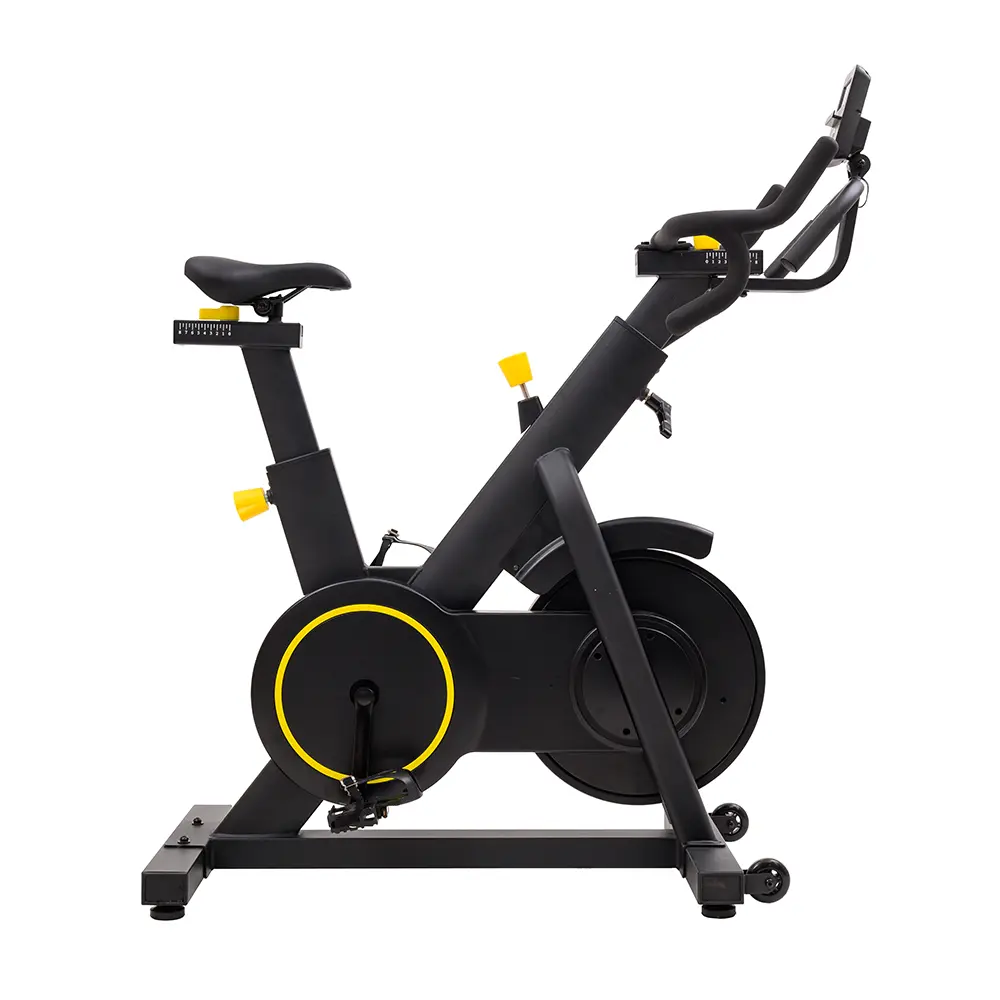
Notice the recovery target: your heart rate must actually fall below 110 bpm between intervals. If it stays elevated, the work interval was too hard or too long, because the cardiovascular system needs that drop to reset. This recovery check is impossible to perform with an unreliable monitor, which is why serious interval riders should not rely on contact grips. A quality spin bike console with chest-strap telemetry makes the whole protocol readable at a glance, and our semi-commercial magnetic spinning bike (TK-S90011) is built for exactly this kind of class-style training load.
Extending Sensor Life: Maintenance Tips From a Factory QA Bench
Most heart rate problems are not sensor failures; they are hygiene and wear issues. Our service data across hundreds of gym installs points to the same handful of culprits, and all of them are preventable.
- Chest straps: rinse the strap in fresh water after every session and air-dry it, because dried sweat corrodes the electrode snaps within months. Replace the strap every 250-400 sessions, roughly once a year for a daily rider, since the conductive fabric loses its signal quality long before it looks damaged.
- Grip pads: wipe the metal contact plates with a damp cloth weekly, because the conductive film from sweat builds up and shorts the signal.
- Consoles: keep Bluetooth and ANT+ pairing clean by deleting old paired devices, because a console that hops between two straps will average them into nonsense.
- Batteries: low transmitter batteries cause dropouts, not low readings. If the display freezes or zeroes mid-ride, replace the battery before suspecting the bike.
One detail most riders miss: chest strap transmitters need wet electrodes or conductive gel to start reading, and many straps require a few seconds of wear before the first signal appears. Because the strap counts every heartbeat as an electrical event, a dry or lifted electrode simply produces no data, which is safer and easier to diagnose than a wrong number. That is why I recommend straps for gyms: they fail loudly, while grip sensors fail quietly.
What to Look for When Buying a Bike With Heart Rate Monitoring
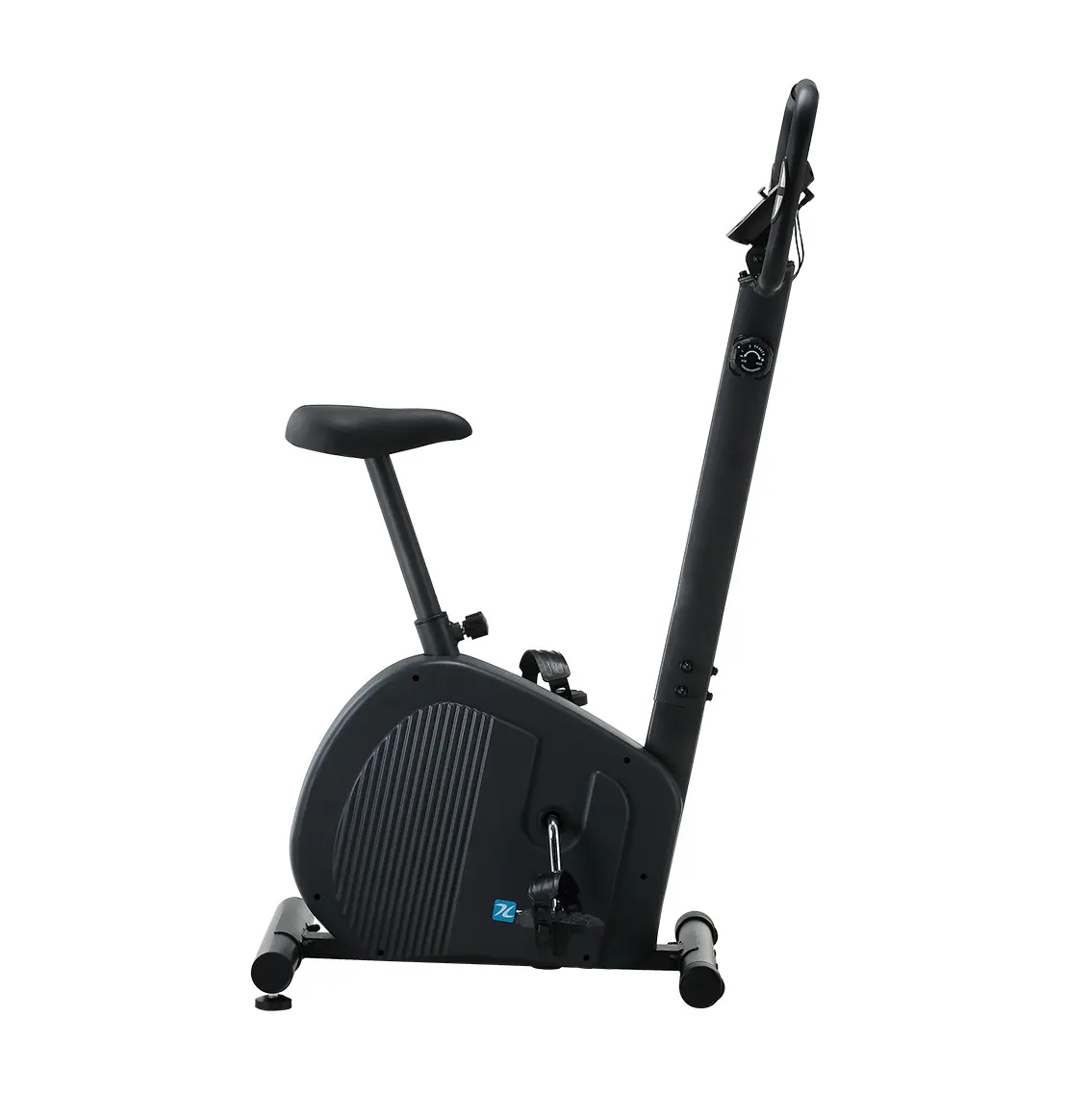
Buying advice depends entirely on how you train. If you ride steady-state for general fitness, contact grips on a solid upright bike are plenty, because a 10 bpm error will not ruin a Zone 2 session. If you follow structured zone programs or interval classes, demand a console that accepts chest-strap telemetry, and budget for a good strap. If you operate a gym or studio, buy for the class experience: multiple straps, live zone display, and consoles that survive daily hammering.
Ask three questions before you buy, whether from us or anyone else: Does the console accept external heart rate transmitters? Is the grip sensor placement comfortable at the riding position you actually use? And can the unit show both heart rate and resistance simultaneously? The last point matters because, in my experience, riders who see both numbers together learn the feel of each zone twice as fast. A bike that hides one of them slows that learning.
Frequently Asked Questions About Exercise Bike Heart Rate Monitors
How accurate is the heart rate monitor on an exercise bike?
Contact-grip handlebar sensors typically deviate from an ECG chest strap by 8-14 bpm during steady cycling and more during intervals, based on our factory tests and published optical-sensor research. Chest straps stay within ±1-3 bpm, while optical sensors fall between the two with a noticeable time lag. For steady-state workouts the console number is usable; for interval training it is not.
Why does my bike's heart rate reading jump around during intervals?
Grip sensors read blood flow through the palms, and hard pedaling changes grip pressure, hand position, and the sweat film on the contact pads. Any of these can break or distort the signal, so the console can suddenly display 170 bpm during a recovery interval. A chest strap eliminates this because it measures the heart's electrical signal directly.
Is the fat burn zone real?
The fat burn zone exists but is widely misunderstood. At 60-70% of maximum heart rate a higher percentage of energy comes from fat, yet total calories per minute are low, so absolute fat oxidation is often higher during harder training. Total weekly energy expenditure matters more for fat loss than the percentage split in any single session.
Chest strap or handlebar grips: which should I use?
Use a chest strap if you train with heart rate zones or intervals, because ECG-level accuracy is required to distinguish Zone 3 from Zone 4. Use handlebar grips if you only want a rough effort reference during steady-state rides and do not want extra equipment. Many spin bikes accept chest strap telemetry through the console.
How do I calculate my training zones?
Estimate maximum heart rate with 220 minus age, then multiply by the zone percentages: Zone 1 at 50-60%, Zone 2 at 60-70%, Zone 3 at 70-80%, Zone 4 at 80-90%, and Zone 5 at 90-100%. For a more personal result use the Karvonen formula, which factors in resting heart rate and shifts the boundaries for fitter individuals.
Why does my bike show a different heart rate than my smartwatch?
The two devices use different technologies and sample at different moments. Grip sensors and optical watches both track blood flow, while only chest straps track the electrical signal, so during effort changes the readings can diverge by 10-20 bpm for several seconds. Differences of 5-10 bpm at steady state are normal; large persistent gaps usually mean one device has a contact problem.
Do I need a heart rate monitor on an exercise bike at all?
No, but it helps. Perceived exertion alone can keep most recreational riders in the right zone, and beginners should not fixate on numbers. A monitor becomes valuable once you structure workouts around zones, want objective progress tracking, or need to cap intensity during cardiac rehab under medical guidance.
Bottom line: Your exercise bike's heart rate monitor is a coach, not a doctor. Use a chest strap for anything zone-based, verify the console with a pulse count before trusting it, and remember that consistent effort beats perfect numbers every time. The TAIKEE product range covers everything from grip-equipped upright bikes to telemetry-ready commercial spin models, so the right monitoring setup exists at every budget.
References and External Sources
1. American College of Sports Medicine — Guidelines for Exercise Testing and Prescription, heart rate zone methodology
2. American Heart Association — Target Heart Rate Chart and the 220-minus-age estimate
3. Shcherbina et al., Journal of Personalized Medicine (2017) — Accuracy of wrist-worn optical heart rate sensors during exercise
4. World Health Organization — Physical activity guidelines for adults
Post time: Aug-04-2026