An Honest Look at the Calorie Math, the Muscle Factor, and the Results You Can Actually Expect
TL;DR: Yes, a rowing machine is genuinely effective for weight loss, because it burns roughly 260-500 calories per 30 minutes for a 155-pound person while engaging about 85 percent of the body's muscles and sparing the joints. The machine alone does not create fat loss, since diet still decides most of the weekly energy deficit. Interval-style rowing adds a post-exercise burn that lasts for hours, which makes shorter hard sessions more productive than long easy ones. Realistic progress runs at 0.5-1 kg per week when rowing is paired with a sensible eating plan, with faster movement early on. Three to four sessions of 25-40 minutes per week beat one heroic weekend workout every time.
How Effective Is Rowing for Weight Loss, Really?
The short answer: rowing is among the best indoor fat-loss tools you can buy, and the long answer explains why. A 155-pound person burns roughly 260 calories in 30 minutes of moderate rowing and about 500 calories in 30 minutes of vigorous rowing, according to the exercise tables published by Harvard Health Publishing. Heavier riders burn more, lighter riders less, and the numbers climb quickly once intervals enter the picture.
What makes rowing special is not any single number. It is the combination: whole-body muscle recruitment, low impact, and a calorie cost that scales with how hard you choose to work. Because the stroke recruits legs, back, core, and arms in one continuous sequence, every pull moves more muscle mass than a step, a pedal stroke, or an elliptical glide. More muscle mass working means more energy demanded, which is exactly the mechanism fat loss depends on.
I have spent twelve years selling rowers, bikes, and ellipticals to gyms across Europe and North America, and I have watched the same pattern repeat: people who row consistently for three months change shape noticeably, and people who row casually do not. The equipment is rarely the difference. The structure of the training is. This article walks through the evidence, the common mistakes, and a practical weekly blueprint you can start tonight.
Where the Rowing Calorie Numbers Actually Come From
Calorie figures for rowing come from metabolic equivalent (MET) values, which measure how many times harder an activity works your body than sitting still. The American College of Sports Medicine compendium assigns stationary rowing a value of 7.0 METs at moderate effort and 8.5 METs at vigorous effort. One MET for a 155-pound person is roughly 70 calories per hour, so moderate rowing works out to about 490 calories per hour and vigorous rowing to about 595 calories per hour at the machine's own pace.
| Machine or Activity | Moderate (30 min) | Vigorous (30 min) | Joint Impact |
|---|---|---|---|
| Rowing machine | ~260 cal | ~500 cal | Very low |
| Stationary bike | ~260 cal | ~390 cal | Very low |
| Elliptical | ~324 cal | ~432 cal | Low |
| Walking (3.5 mph) | ~149 cal | N/A | Low |
| Running (6 mph) | ~355 cal | N/A | High |
Values for a 155-pound person over 30 minutes, based on the Harvard Health Publishing calorie chart. Vigorous categories reflect maximal sustainable effort.
Notice what the table shows: at moderate effort, rowing and cycling burn about the same, but at vigorous effort rowing pulls ahead by roughly 110 calories per half hour. The reason is simple physics, because the upper body keeps working after the legs fatigue, so vigorous rowing can hold a higher total power output than legs-only cardio. That extra 110 calories, repeated three or four times a week, becomes roughly 1,500 calories a month of bonus deficit from the same session length.
The Muscle-Mass Angle: Rowing Protects Your Metabolism While You Slim Down
Weight loss is not just about subtracting calories, because a calorie is not neutral when it comes to body composition. Crash-diet cardio burns fat and muscle together, and losing muscle lowers your resting metabolism, which makes the next kilogram harder than the last. Rowing sidesteps that trap because it is a resistance-loaded cardio workout: every stroke pushes against a real load, and muscles respond to load by holding onto their tissue.
Roughly 85 percent of the body's skeletal muscle mass participates in the rowing stroke, which makes it closer to a strength-endurance exercise than a pure cardio one. The legs drive, the core braces, the back pulls, and the arms finish, so the body gets a maintenance signal to keep lean tissue while the calorie deficit does its work on fat stores. In practical terms, rowers tend to come out of a weight-loss phase looking firmer rather than deflated, and their resting metabolism stays higher than it would after the same deficit built on walking alone.
My honest view, shaped by a decade of customer follow-ups: this is the single biggest advantage rowing has over the treadmill for the weight-loss crowd. The scale may move at a similar pace, but the mirror tells a kinder story.
The Afterburn Effect: Why Short Hard Sessions Outwork Long Easy Ones
Exercise burns calories during the session, and that part is easy to measure. What most people miss is the part that happens afterward, when the body repays the oxygen debt and repairs the muscles it just stressed. This delayed burn, called excess post-exercise oxygen consumption (EPOC), is modest after easy rowing and meaningful after intervals.
A widely cited review by Boutcher (2011) in the Journal of Obesity concluded that high-intensity intermittent exercise produces greater fat loss than steady-state work at equal or even lower total energy cost. Because interval efforts push the body into an oxygen debt, the metabolism stays elevated for several hours afterward, adding roughly 6-15 percent to the session's total energy expenditure. On a 400-calorie interval session, that bonus is 24-60 calories, small per session but compounding across a year of training.
The practical translation is liberating: a 24-minute interval row can outwork a 45-minute easy row for fat-loss purposes. You do not need more time; you need more intent inside the time you have.

Beyond the Scale: Track Progress That Does Not Lie
The scale is a blunt instrument, and rowing blunts it further, because the same body can gain muscle and lose fat while the number barely moves. Anyone serious about rowing for weight loss should track four better signals.
- 500-meter split time: the single clearest sign of fitness gain. Faster splits at the same perceived effort mean the engine is stronger.
- Waist circumference: measure at the navel weekly, same time of day. This tracks visceral fat better than the scale.
- Resting heart rate: taken before getting up each morning. A falling trend of 3-8 beats per minute over 8 weeks signals real cardiovascular adaptation.
- Photos and clothing fit: the mirror and your jeans are brutally honest about composition changes the scale misses.
One more thing I tell every buyer: take a baseline now, before you start, and do not re-check for two weeks. Early numbers move mostly water and morale; the fat story only starts around week three.
Frequently Asked Questions About Rowing Machine Weight Loss
Is a rowing machine good for weight loss?
Yes, a rowing machine is one of the most effective indoor tools for weight loss because it combines high calorie expenditure with whole-body muscle engagement and low joint impact. A 155-pound person burns roughly 260 calories in 30 minutes of moderate rowing and about 500 calories in 30 minutes of vigorous rowing. Results still depend on diet and weekly consistency.
How many calories does 30 minutes of rowing burn?
For a 155-pound person, 30 minutes of moderate rowing burns approximately 260 calories, while 30 minutes of vigorous rowing burns around 500 calories, according to Harvard Health Publishing. Heavier individuals burn more, lighter individuals burn less. Adding interval bursts raises the total for the same session length.
Rowing vs treadmill for weight loss: which is better?
Both work, but they are different tools. A treadmill can match rowing's calorie burn at faster running speeds, yet it delivers higher impact to the knees and ankles. Rowing burns comparable calories while engaging the upper body and core, and its low-impact nature lets most people train more often, which often produces better long-term adherence.
How often should I row to lose weight?
Three to four sessions per week of 25-40 minutes each is a practical target for weight loss, with at least one session built around intervals. This volume creates a meaningful weekly energy deficit while leaving enough recovery time. Beginners should start with two to three shorter sessions and build up over four weeks.
Why am I not losing weight despite rowing?
The most common reasons are easy-intensity sessions, arm-only pulling, no workout progression, and calorie intake that cancels the deficit. A single 30-minute session covers roughly 260-500 calories, which a large snack can erase in minutes. Track intake honestly, raise intensity gradually, and give the plan at least six to eight weeks.
Does rowing burn belly fat?
Rowing burns fat from the whole body, and spot reduction is a myth. Because rowing engages the core on every stroke and creates a solid calorie deficit, it can visibly reduce abdominal fat over time, but only as part of overall fat loss. Genetics decide the order in which fat leaves different areas.
How long before I see results from rowing?
Most people notice better endurance and firmer legs within three to four weeks, and measurable weight change within six to eight weeks when diet is also addressed. Early drops of 1-2 kg in the first two weeks are often water and glycogen, not fat. Realistic fat loss runs at 0.5-1 kg per week.
Bottom line: Rowing is a genuinely powerful weight-loss tool, but it is a tool, not a promise. Train three to four times a week, keep at least one session hard, let the legs do the pulling, and keep the kitchen honest. Do that for twelve weeks and the numbers will follow, on the scale and in the mirror.
References and External Sources
1. Harvard Health Publishing — Calories Burned in 30 Minutes for People of Three Different Weights
2. American College of Sports Medicine — Compendium of Physical Activities and Exercise Guidelines
3. Boutcher, Journal of Obesity (2011) — High-Intensity Intermittent Exercise and Fat Loss
4. Mayo Clinic — Exercise and Weight Loss: How Much Is Enough?
5. World Health Organization — Physical Activity Guidelines for Adults
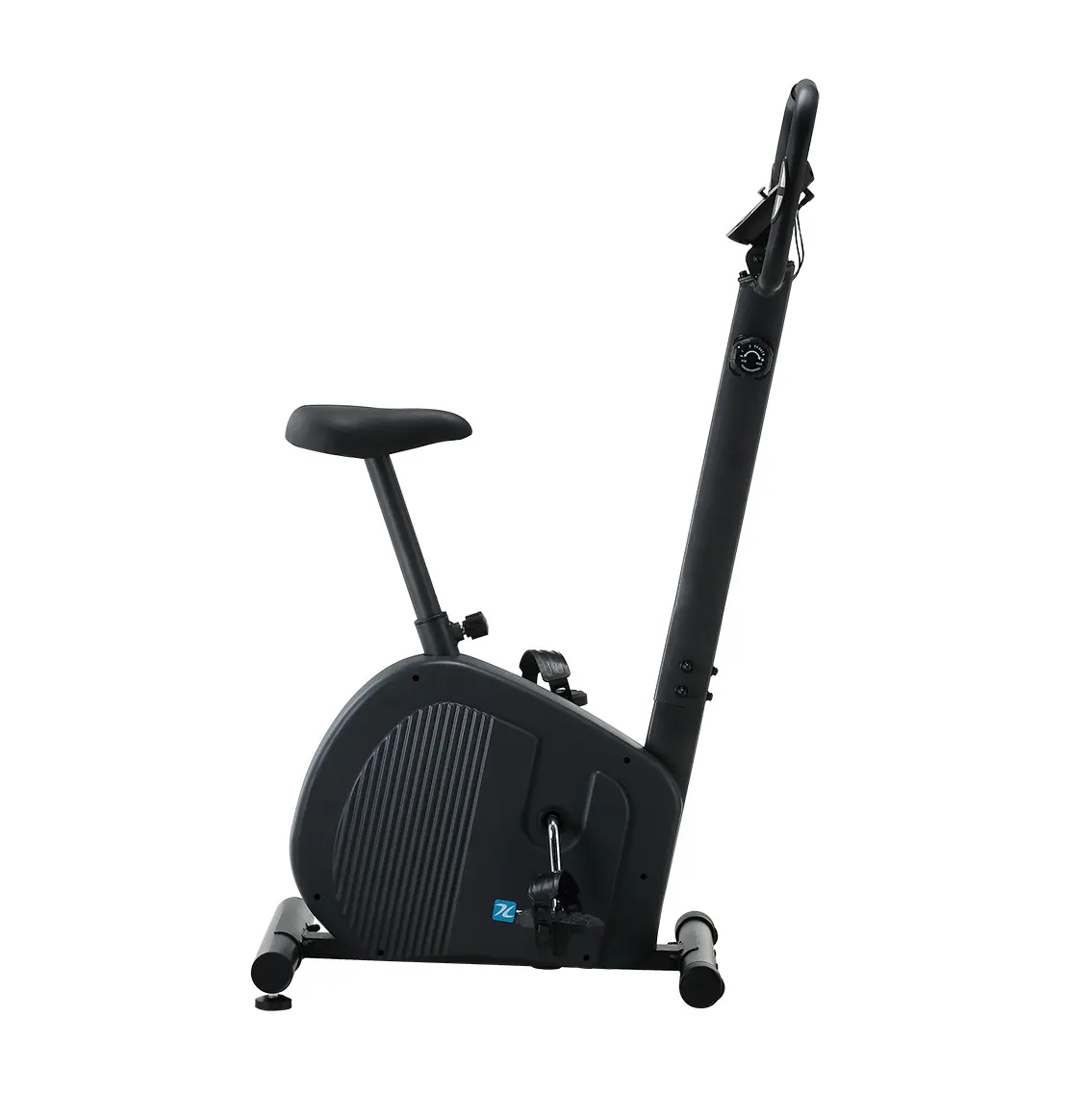
Frequently Asked Questions About Exercise Bike Heart Rate Monitors
How accurate is the heart rate monitor on an exercise bike?
Contact-grip handlebar sensors typically deviate from an ECG chest strap by 8-14 bpm during steady cycling and more during intervals, based on our factory tests and published optical-sensor research. Chest straps stay within ±1-3 bpm, while optical sensors fall between the two with a noticeable time lag. For steady-state workouts the console number is usable; for interval training it is not.
Why does my bike's heart rate reading jump around during intervals?
Grip sensors read blood flow through the palms, and hard pedaling changes grip pressure, hand position, and the sweat film on the contact pads. Any of these can break or distort the signal, so the console can suddenly display 170 bpm during a recovery interval. A chest strap eliminates this because it measures the heart's electrical signal directly.
Is the fat burn zone real?
The fat burn zone exists but is widely misunderstood. At 60-70% of maximum heart rate a higher percentage of energy comes from fat, yet total calories per minute are low, so absolute fat oxidation is often higher during harder training. Total weekly energy expenditure matters more for fat loss than the percentage split in any single session.
Chest strap or handlebar grips: which should I use?
Use a chest strap if you train with heart rate zones or intervals, because ECG-level accuracy is required to distinguish Zone 3 from Zone 4. Use handlebar grips if you only want a rough effort reference during steady-state rides and do not want extra equipment. Many spin bikes accept chest strap telemetry through the console.
How do I calculate my training zones?
Estimate maximum heart rate with 220 minus age, then multiply by the zone percentages: Zone 1 at 50-60%, Zone 2 at 60-70%, Zone 3 at 70-80%, Zone 4 at 80-90%, and Zone 5 at 90-100%. For a more personal result use the Karvonen formula, which factors in resting heart rate and shifts the boundaries for fitter individuals.
Why does my bike show a different heart rate than my smartwatch?
The two devices use different technologies and sample at different moments. Grip sensors and optical watches both track blood flow, while only chest straps track the electrical signal, so during effort changes the readings can diverge by 10-20 bpm for several seconds. Differences of 5-10 bpm at steady state are normal; large persistent gaps usually mean one device has a contact problem.
Do I need a heart rate monitor on an exercise bike at all?
No, but it helps. Perceived exertion alone can keep most recreational riders in the right zone, and beginners should not fixate on numbers. A monitor becomes valuable once you structure workouts around zones, want objective progress tracking, or need to cap intensity during cardiac rehab under medical guidance.
Bottom line: Your exercise bike's heart rate monitor is a coach, not a doctor. Use a chest strap for anything zone-based, verify the console with a pulse count before trusting it, and remember that consistent effort beats perfect numbers every time. The TAIKEE product range covers everything from grip-equipped upright bikes to telemetry-ready commercial spin models, so the right monitoring setup exists at every budget.
References and External Sources
1. American College of Sports Medicine — Guidelines for Exercise Testing and Prescription, heart rate zone methodology
2. American Heart Association — Target Heart Rate Chart and the 220-minus-age estimate
3. Shcherbina et al., Journal of Personalized Medicine (2017) — Accuracy of wrist-worn optical heart rate sensors during exercise
4. World Health Organization — Physical activity guidelines for adults
Post time: Aug-12-2026