Core finding: Low-impact cardio workouts deliver cardiovascular benefits comparable to running or jumping sports while reducing joint impact forces by 40-60 percent. This is because the feet remain in contact with the ground or equipment platform throughout the movement, eliminating the ground reaction spike produced during heel strike in running.
Best options ranked by joint load: Swimming (lowest load) → recumbent cycling → upright cycling → elliptical training → walking → rowing. All six options meet CDC physical activity guidelines for moderate-intensity aerobic exercise.
Caloric range: A 155-pound individual burns 200-350 calories per 30-minute session depending on the modality and effort level.
What Makes a Cardio Workout Low Impact
Impact in exercise refers to the force transmitted through the skeleton when the body makes contact with a surface. Low impact cardio workouts eliminate or minimize the landing phase that produces impact forces. Activities where at least one foot remains in contact with the ground or a supporting surface at all times qualify as low impact. Running produces 2.5 to 3.5 times body weight in ground reaction force during each heel strike. Low-impact alternatives reduce this to 1.0 to 1.5 times body weight.
The distinction between low-impact and low-intensity is critical. Low impact describes force transmission through joints. Low intensity describes cardiovascular demand. A low-impact workout can be high intensity—an elliptical session at maximum resistance elevates heart rate to 150-170 beats per minute without adding impact stress. This separation makes joint-friendly cardio accessible across all fitness levels.
According to the Arthritis Foundation, low-impact exercise reduces joint pain by 25-40 percent in individuals with osteoarthritis while improving functional mobility. The reduction in inflammatory markers following regular low-impact activity supports cartilage health and synovial fluid circulation.
Elliptical Training: Full-Body Low Impact Cardio
Elliptical trainers produce ground reaction forces of 1.2 to 1.5 times body weight, approximately one-third of the force generated during running. According to the Centers for Disease Control and Prevention, elliptical training qualifies as moderate-intensity activity at 3-5 metabolic equivalents when performed at standard resistance settings. The absence of a landing phase protects the knee, hip, and ankle joints from compressive stress.
The elliptical motion engages the quadriceps, hamstrings, glutes, and calves through the lower body while the moving handles recruit the chest, back, and arms. Total muscle engagement reaches approximately 80 percent of skeletal muscle mass, positioning elliptical training as one of the most efficient low-impact modalities for simultaneous cardiovascular and muscular conditioning.
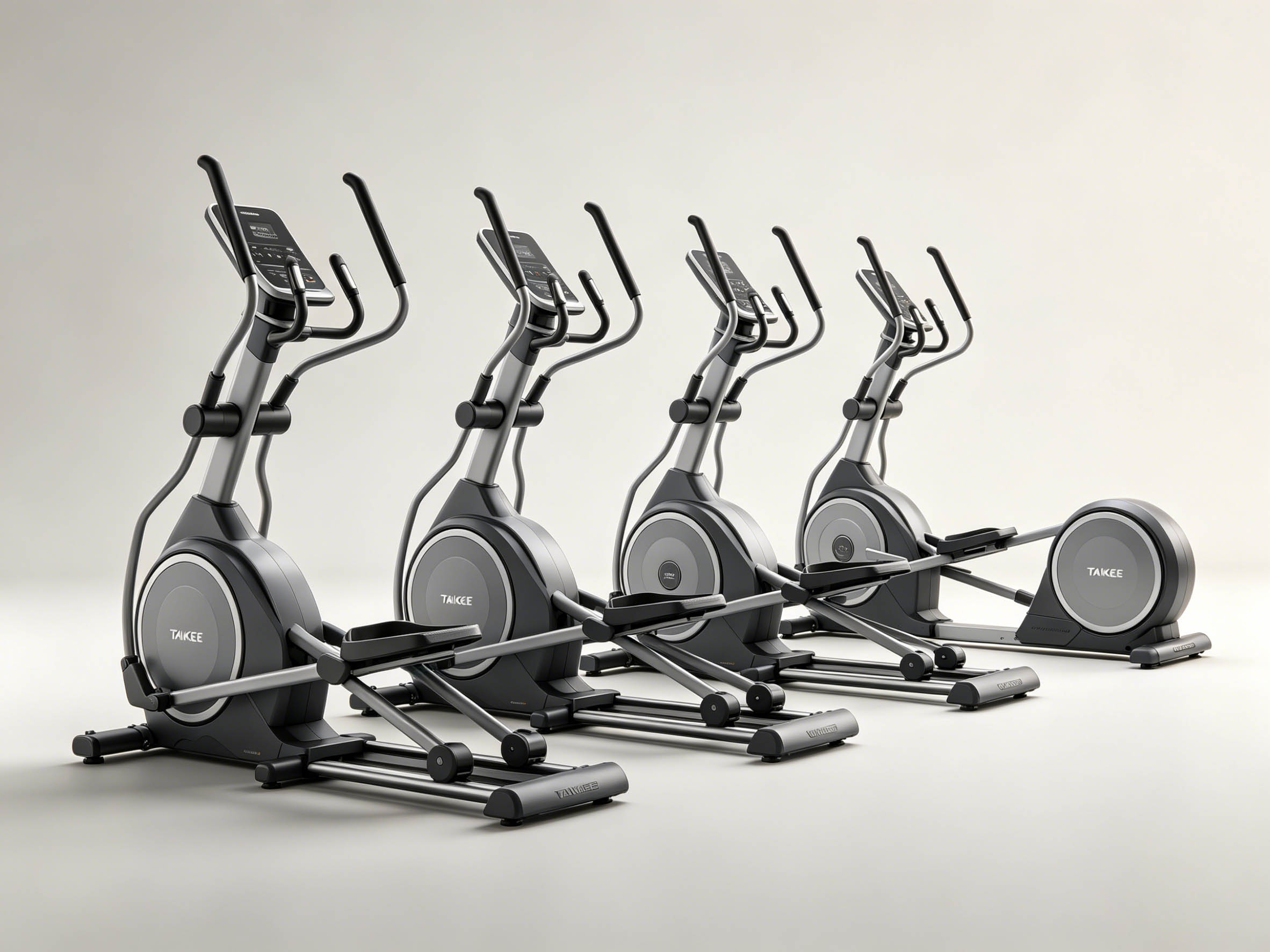
Front-drive configurations place the flywheel ahead of the user, producing a shorter frame length of 5.5 to 6.5 feet and a stride path that slopes upward. Rear-drive ellipticals position the flywheel behind the user, extending frame length to 6.5 to 8 feet with a flatter, more natural walking stride. Both configurations deliver equivalent cardiovascular benefits. For a selection of elliptical options suited to home and semi-commercial use, see the TAIKEE ellipticals lineup.
Stationary Cycling: Zero-Impact Cardiovascular Conditioning
Stationary cycling is zero-impact because body weight is fully supported by the seat. No axial load passes through the spine, hips, knees, or ankles during the pedaling motion. Harvard Health Publishing reports that a 155-pound person burns 260-300 calories during 30 minutes of moderate stationary cycling, matching elliptical training in caloric output while completely eliminating impact forces.
Upright bikes position the user in a forward-leaning posture similar to outdoor cycling, engaging core stabilizers for trunk support. Recumbent bikes provide a reclined seated position with back support, making them accessible for users with lower back concerns or balance limitations. Recumbent cycling burns 10-15 percent fewer calories at matched perceived exertion due to reduced postural muscle activation, though users often compensate by extending session duration.
Magnetic resistance systems on stationary bikes provide consistent tension through eddy current braking, requiring no pad contact and producing negligible mechanical noise. Air resistance bikes increase resistance proportionally with effort, creating a natural feedback loop for higher-intensity intervals. The magnetic upright bike and magnetic recumbent bike from TAIKEE offer eight resistance levels suitable for progressive training plans.
Rowing: Low Impact With High Caloric Demand
Rowing machines deliver low-impact full-body conditioning through a seated sliding motion. The seat glides along a rail while the legs drive the body backward, followed by core engagement and arm pull. Impact forces are zero because the body never leaves contact with the seat or footplates. The sliding seat converts horizontal force into mechanical work without vertical ground reaction.
Rowing engages approximately 86 percent of skeletal muscle mass across the legs, core, back, and arms. A 155-pound individual burns 250-300 calories per 30-minute session at moderate intensity. The coordinated leg-core-arms sequence distributes workload across multiple muscle groups, reducing the repetitive strain on individual joints that occurs in single-plane activities like cycling.
Air resistance rowers provide progressive resistance that matches stroke effort, suitable for interval training. Magnetic resistance rowers deliver consistent tension throughout the stroke, helping users focus on technique. Dual-resistance rowers that combine air and magnetic braking offer the broadest training range. The TAIKEE rowing machines include air, magnetic, and dual-resistance models designed for home and commercial fitness applications.
Low Impact Cardio Comparison: Modalities Side by Side
| Modality | Impact Force | Calories / 30 min (155 lb) | Muscle Engagement | Best For |
|---|---|---|---|---|
| Elliptical | 1.2-1.5x body weight | 260-320 | ~80% (full body) | Weight-bearing without impact |
| Stationary Bike | Zero (seated) | 230-300 | ~45% (lower body dominant) | Joint recovery, low-back protection |
| Rowing Machine | Zero (seated glide) | 250-300 | ~86% (full body sequenced) | Total body conditioning |
| Swimming | Near zero (buoyant) | 200-280 | ~70% (upper body emphasis) | Maximum joint relief |
| Brisk Walking | 1.2-1.8x body weight | 140-180 | ~35% (lower body) | Accessible entry point |
Impact forces and caloric estimates based on ACSM metabolic calculations and published biomechanical data.
Joint Health Benefits of Low Impact Cardio Workouts
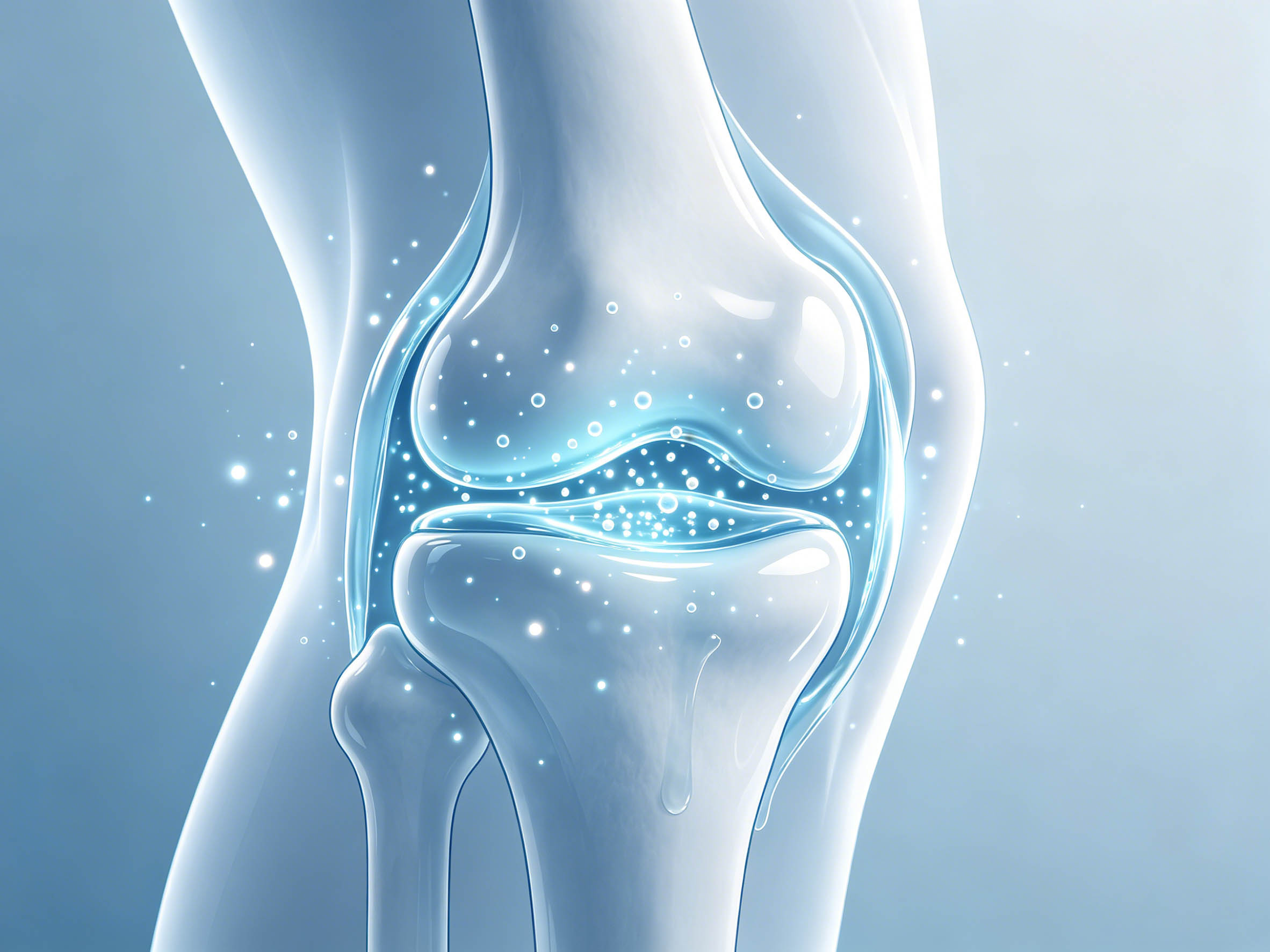
Regular low impact cardio workouts produce specific benefits for joint structures that high-impact activities do not. Synovial fluid circulation increases during low-impact motion, delivering nutrients to articular cartilage. This process keeps cartilage surfaces lubricated and reduces friction during movement. Joint stiffness decreases measurably within 2-4 weeks of consistent low-impact aerobic training.
Muscle strengthening around the knee and hip joints through low-impact exercise provides dynamic stability. The quadriceps, hamstrings, and gluteal muscles function as active stabilizers that absorb forces before they reach the joint surfaces. A 12-week elliptical training program increases knee flexor strength by 15-22 percent according to published research in the American College of Sports Medicine affiliated journals.
Bone mineral density maintenance requires weight-bearing activity, which low-impact exercises provide at reduced levels. Elliptical training and brisk walking produce enough axial loading to signal bone remodeling without the fracture risk associated with running. Users with osteopenia or osteoporosis can maintain bone density through consistent low-impact weight-bearing exercise while avoiding the 3x body weight forces of jogging.
Designing a Weekly Low Impact Cardio Schedule
Meeting the CDC recommendation of 150 minutes of moderate-intensity aerobic activity per week is achievable through a combination of low-impact modalities. A well-structured weekly plan alternates between modalities to distribute muscular demand and maintain engagement.
| Day | Activity | Duration | Modality Focus |
|---|---|---|---|
| Monday | Elliptical training | 30 min | Full-body low-impact conditioning |
| Tuesday | Stationary cycling | 35 min | Zero-impact lower body endurance |
| Wednesday | Rest or walking | 20-30 min | Active recovery |
| Thursday | Rowing | 25 min | Full-body sequenced power |
| Friday | Elliptical or cycling | 30 min | Preferred modality choice |
| Saturday | Swimming or rowing | 30 min | Alternative modality variety |
| Sunday | Rest | — | Complete recovery |
Each session should include a 3-5 minute warm-up at low resistance to increase synovial fluid circulation before reaching the target intensity zone. Heart rate during the main work block should reach 60-80 percent of maximum, calculated as 220 minus age. A 40-year-old targets 108-144 beats per minute for moderate aerobic conditioning.
Low Impact Exercise for Specific Joint Conditions
Different joint conditions respond better to specific low-impact modalities. Knee osteoarthritis benefits most from stationary cycling because the seated position eliminates weight-bearing load through the tibiofemoral joint. The pedaling motion maintains range of motion and quadriceps strength without compressive stress.
Hip osteoarthritis responds well to elliptical training. The elliptical motion keeps the femoral head engaged in the acetabulum through a controlled arc, maintaining articular cartilage nutrition while avoiding the impingement positions that occur during deep squats or lunges. The moving handles add upper body engagement without increasing hip joint load.
Lower back conditions require equipment that maintains spinal neutral position. Recumbent cycling with back support and rowing with proper core bracing provide safe options. The seated position on both modalities supports the lumbar spine while allowing cardiovascular conditioning at 60-80 percent of maximum heart rate.
How to Progress Intensity Without Increasing Impact
Progressing cardiovascular intensity on low-impact equipment follows three strategies. Increasing resistance on ellipticals, bikes, or rowers raises power output without changing joint forces. A higher damper setting on air resistance equipment or a higher magnetic resistance level forces muscles to generate more force per revolution.
Increasing cadence or stroke rate elevates heart rate through faster movement. Elliptical cadence can increase from 120 to 160 strides per minute. Cycling cadence can increase from 70 to 100 RPM. Rowing stroke rate can increase from 20 to 30 strokes per minute. Each 10 percent increase in cadence raises caloric expenditure by approximately 8-12 percent.
Extending session duration provides progressive overload without modifying intensity. Adding 5 minutes per week to each session increases weekly volume by 15-20 minutes, maintaining low-impact status while accumulating additional caloric expenditure and aerobic stimulus.
Conclusion: Selecting the Right Low Impact Modality
Low impact cardio workouts offer complete cardiovascular conditioning without the joint stress of high-impact alternatives. Elliptical training, stationary cycling, and rowing provide three complementary modalities that together deliver full-body muscular engagement, progressive intensity options, and zero to minimal joint impact. The choice between them depends on individual joint conditions, space availability, and personal preference for seated versus standing exercise positions.
Users with existing joint concerns should select equipment that allows pain-free range of motion through the affected joint. Those with no joint limitations can rotate between modalities to distribute training stimulus across different muscle groups and prevent overuse patterns. The 150-minute weekly target becomes achievable when multiple low-impact options are available and rotated regularly.
Frequently Asked Questions About Low Impact Cardio Workouts
Can low-impact cardio burn as many calories as running?
A 155-pound individual burns 260-320 calories in 30 minutes of moderate elliptical training versus 300-360 calories running at 6 mph. The 10-15 percent difference narrows when factoring in longer session durations possible with low-impact exercise. Running produces 2.5-3.5 times body weight in ground reaction force, while elliptical training reduces this to 1.2-1.5 times.
Is walking considered low-impact cardio?
Yes, walking produces ground reaction forces of 1.2 to 1.8 times body weight, classifying it as low-impact. A 155-pound person burns 140-180 calories per 30-minute brisk walk. The key limitation is the lower caloric burn rate compared to elliptical or cycling, which means users need longer walking sessions or higher intensity to match total energy expenditure.
Which low-impact equipment is best for knee pain?
Stationary cycling is the best low-impact option for knee pain because the seated position removes all weight-bearing load through the knee joint. The pedaling motion maintains range of motion and quadriceps strength without compressive stress. Users with patellofemoral pain should keep resistance levels moderate and seat height adjusted to produce a 25-35 degree knee bend at pedal bottom.
How many minutes per week of low-impact cardio is recommended?
The CDC recommends 150 minutes of moderate-intensity aerobic activity weekly for general health. This can be achieved through 30-minute sessions five days per week using any combination of elliptical training, stationary cycling, rowing, swimming, or brisk walking. Splitting across modalities reduces muscular fatigue and improves adherence.
Does elliptical training build bone density?
Elliptical training provides enough weight-bearing stimulus to maintain bone mineral density through axial loading of approximately 1.2 to 1.5 times body weight. This level of loading signals bone remodeling without the fracture risk associated with higher-impact activities. For those with osteopenia, elliptical training combined with resistance exercise provides comprehensive bone health support.
Can you do high-intensity training with low-impact cardio?
Yes. High-intensity interval training on low-impact equipment is effective and safe. A sample protocol on an elliptical or stationary bike involves 30-second sprints at maximum sustainable cadence followed by 60-90 seconds of light pedaling. Heart rate reaches 85-95 percent of maximum during work intervals without exposing joints to impact forces. Post-exercise oxygen consumption following low-impact HIIT equals that of running-based HIIT.
References and External Sources
1. Centers for Disease Control and Prevention — Physical Activity Guidelines and MET Classification
2. Arthritis Foundation — Low-Impact Exercise Recommendations for Joint Health
3. Harvard Health Publishing — Exercise and Joint Health: Benefits of Low-Impact Cardio
4. American College of Sports Medicine — Metabolic Calculations and Exercise Program Guidelines
Post time: Jun-30-2026